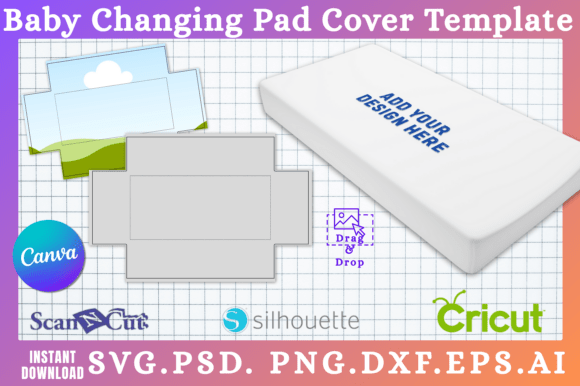
Baby Changing Pad Cover Canva Template
A Designer’s First Look: Simple, Sweet, and Surprisingly Versatile
When I opened the Baby Changing Pad Cover Canva Template, my first thought wasn’t “cute”—it was “workable.” As someone who’s stitched hundreds of baby-themed designs for Etsy shops, boutique nurseries, and custom gift clients, I’ve learned that charm without clarity is a liability. This template lands softly: rounded corners, gentle negative space, a central focal area sized for a 4”–5” hoop, and clean margins that breathe on fabric. It doesn’t shout—it invites. That makes it ideal for embroidery projects where subtlety and craftsmanship matter more than flash: think monogrammed changing pad covers, personalized burp cloths, or minimalist nursery wall hangings.
How It Translates to Real Embroidery Projects
I tested the Baby Changing Pad Cover Canva Template as the base for a custom embroidered cotton twill tote—intended for a local midwife’s client welcome kit. The layout held up beautifully: the centered frame left room for a small satin-stitched name below and a delicate running-stitch border along the top edge. Because the template is built with clear visual hierarchy—not overcrowded, not overly ornate—it gave me breathing room to add embroidery without fighting the composition.
It also worked well scaled down for a baby onesie chest placement (using light tear-away stabilizer), and scaled up for a linen tea towel (with cut-away backing for stability). What stood out was how naturally it supported both machine embroidery design and applique design workflows. The open center lets you drop in a custom motif—say, a tiny embroidered owl or a soft cloud shape—without clipping or distortion. For Etsy sellers bundling digital embroidery files, this template is a smart anchor: customers can layer their own motifs, fonts, or seasonal accents while keeping brand consistency across listings.
Where to Use It—and Where to Pause
This isn’t a one-size-fits-all embroidery file. Its strengths shine on stable, medium-weight fabrics: cotton poplin, quilting cotton, twill, and linen blends. On stretchy knits like jersey or thin rayon challis? Proceed carefully. Without built-in underlay or dense fill stitch guidance, fine details may shift or pucker. Same goes for dark fabric: if your intended thread colors lack contrast, the delicate outlines can disappear—always test in black-and-white mockups first.
Curved surfaces—like the front of a structured cap—require extra attention. The template’s flat, rectangular framing doesn’t auto-adapt to dome-shaped hooping. You’ll need to adjust placement manually and possibly reduce density in corner areas to avoid thread buildup. And if you’re stitching on textured fabric (terry cloth, bouclé, or heavily napped fleece), simplify any interior line work—the texture will obscure fine running stitches.
Small Hoop Reality Check
At its native size, the Baby Changing Pad Cover Canva Template fits comfortably in a 5×7 hoop—but push it into a 4×4, and some spacing tightens. Tiny lettering or narrow borders lose legibility. If you plan to use it for embroidered patches or cap fronts, zoom in before digitizing: check whether inner corners are sharp enough for clean satin stitch turns, and whether any internal gaps are wide enough to prevent skipped stitches.
What It Adds to Your Finished Product—Beyond Aesthetics
Customers don’t just buy embroidery—they buy intention. A well-framed, balanced layout like this signals care. When used on a handmade product—say, a custom sweatshirt for a baby shower gift—it elevates perceived value. The template’s restraint helps your stitching stand out, not compete. No busy background noise means your thread colors, stitch quality, and fabric choice stay center stage.
For craft business owners, that translates directly to trust. Buyers browsing your Etsy shop notice clean composition before they read your description. Consistent use of this template across nursery-themed listings (blankets, bibs, milestone cards) builds quiet brand recognition—especially when paired with a signature font or color palette in your printable mockups.
Practical Notes Every Embroidery Designer Should Run Through
- Test on scrap fabric first—especially if pairing with stabilizer types you haven’t used recently.
- Check thread color contrast on both light and dark fabric swatches before committing to a full run.
- Review stitch density: look for any unintended overlaps or thin fill areas that might show through on lightweight cotton.
- Confirm hoop size compatibility—this is a Canva-based graphics file, so you’ll need to export and digitize it properly for your embroidery machine.
- Inspect small details at 200% zoom: corners, joins, and inner edges should be smooth, not jagged or pixelated.
- Use proper stabilizer—lightweight cut-away for knits, tear-away for stable wovens, and fusible for layered items like quilted changing pads.
- Verify licensing before selling finished items or reselling the digital embroidery file—this is a digital download, but commercial use rights aren’t stated in the listing.
Final Thought: A Quietly Powerful Design Asset
The Baby Changing Pad Cover Canva Template won’t go viral on social media—but it will earn repeat orders from clients who appreciate thoughtful, stitch-ready design. It’s the kind of asset that makes your workflow smoother, your finished products more cohesive, and your small shop feel more intentional. Whether you’re prepping holiday embroidery for a boutique launch or building a collection of digital embroidery files for fellow makers, this template earns its place—not as a standalone showstopper, but as a reliable, adaptable foundation. Just remember: great embroidery starts with smart structure, not just pretty pixels.