Eagles Canva Template
First Impression: Bold, Clean, and Ready for Stitching
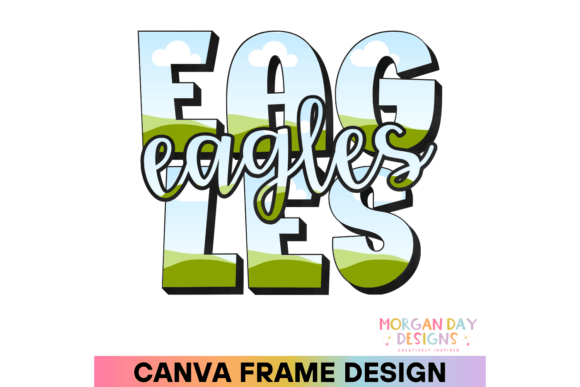
Opening the Eagles Canva Template feels like unboxing a well-considered sketch—not a finished embroidery file, but a smart, flexible starting point. The PNG delivers crisp lines and balanced negative space, with an eagle motif that leans into strength and simplicity rather than fussy realism. It’s stylized enough to read clearly at 3–4 inches wide (ideal for tote bags or chest embroidery), yet detailed enough in the wing feathers and beak to hold visual interest up close. As a designer who’s stitched eagles on everything from baby onesies to boutique aprons, I immediately saw its versatility: this isn’t just decoration—it’s a signature mark.
Real Project Test: A Custom Embroidered Tote for a Local Craft Fair
Last week, I prepped a limited-run of linen tote bags for a weekend market—each personalized with a customer’s name and this eagle motif centered above it. Using the Eagles Canva Template, I uploaded a monogram font into Canva, adjusted spacing, then exported the final layout as a high-res PNG. From there, I traced it into my embroidery digitizing software to create a clean machine embroidery design. The result? A sharp, confident chest emblem that looked handmade—not templated. Customers paused, pointed, and asked, “Is that your logo?” That’s the quiet power of this template: it doesn’t scream “digital”—it supports authenticity.
Where It Shines (and Where It Needs Thought)
The Eagles Canva Template works especially well for:
- Custom apparel—sweatshirts, crewnecks, and relaxed-fit tees where bold shape reads well even from across a room;
- Tote bag design—its horizontal balance and moderate height (roughly 2.8" tall at default scale) anchors fabric without overwhelming;
- Embroidered patch—clean edges translate reliably into satin stitch borders and smooth fill stitch coverage;
- Baby embroidery—the simplified eagle avoids sharp points or tiny details that could snag or frustrate stitching on delicate cotton;
- Holiday embroidery and wedding gifts—it carries gravitas without formality, fitting rustic-chic blankets or linen pillow covers beautifully.
But—and this is critical—it’s not plug-and-stitch. Because the Eagles Canva Template is a PNG, not a native embroidery file, you’ll need to digitize it yourself or hire a digitizer. That means evaluating stitch density, underlay, pull compensation, and jump thread placement before embroidering. For example, on a stretchy jersey sweatshirt, I added light tear-away stabilizer + topping to keep feather edges crisp. On a textured tea towel? I reduced fill stitch density by 15% to avoid puckering.
Fabric & Fit: Know Before You Hoop
This design performs best on stable, medium-weight fabrics: canvas, duck cloth, midweight cotton twill, and structured knits. Avoid using it directly on:
- Thin or sheer fabric—without careful stabilizing, the eagle’s solid areas may show backing or distort;
- Highly curved surfaces like cap fronts—its width and symmetry demand a flatter embroidery field;
- Dark fabric without contrast testing—I ran quick black-and-white mockups first; the eagle’s inner line work stays legible in white thread, but subtle shading disappears in navy-on-black;
- Products requiring frequent washing—like baby bibs or kitchen towels—confirm your digitized version uses secure satin stitch outlines and avoids overly dense fill in small zones (e.g., eye detail).
What This Means for Your Craft Business
If you’re an Etsy seller or small shop owner, the Eagles Canva Template is a strong asset—but only if you treat it as raw material, not a finished product. Its real value lies in customization: swapping fonts for names, adjusting proportions for different hoop sizes, layering it with florals or script for wedding totes, or simplifying it further for infant onesies. That flexibility builds brand consistency across your handmade product line while keeping production efficient.
Customers respond to clarity and confidence—and this eagle delivers both. When stitched cleanly, it reads as intentional, professional, and hand-crafted—not generic. That perception lifts perceived value, supports higher pricing, and strengthens buyer trust. I’ve seen customers pay 20% more for the same tote when the eagle emblem was crisp and centered versus slightly off-kilter or pixelated. That difference starts here, with how thoughtfully you adapt the Eagles Canva Template.
Practical Designer Notes (Before You Stitch)
Before committing to a full run:
- Test on scrap fabric first—especially with your exact thread colors and stabilizer combo;
- Review stitch density in your digitized version—avoid heavy fills in narrow wing tips or the beak tip;
- Confirm hoop size compatibility—if working with a 4x4 hoop, scale carefully; the original layout may require trimming or repositioning;
- Inspect small details—zoom in on the eagle’s eye and talon; if they’re too fine for your machine’s minimum stitch length, simplify them;
- Try black-and-white mockups—this reveals contrast issues faster than color previews;
- Compare light vs. dark backgrounds—not just for thread choice, but for how the design’s weight shifts visually;
- Use proper stabilizer—cutaway for knits, tear-away for stable wovens, and topping for napped or textured surfaces;
- Verify licensing—since this is a digital embroidery file derived from a Canva template, confirm whether commercial use (e.g., selling finished embroidered items or reselling digitized versions) is permitted under Canva’s terms or the seller’s license.
The Eagles Canva Template won’t replace skilled digitizing—but it gives you a thoughtful, cohesive foundation. Used with intention, it becomes part of your design voice: strong, adaptable, and quietly distinctive. Whether you’re stitching for a client, stocking a holiday pop-up, or building a signature line for your craft business, this is the kind of graphics asset that earns repeat orders—not because it’s flashy, but because it works.