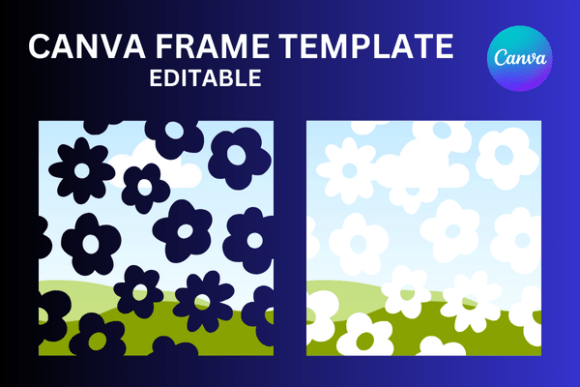
Flower Seamless Pattern Canva Frame
A Designer’s First Glance: Soft, Flowing, and Ready for Stitching
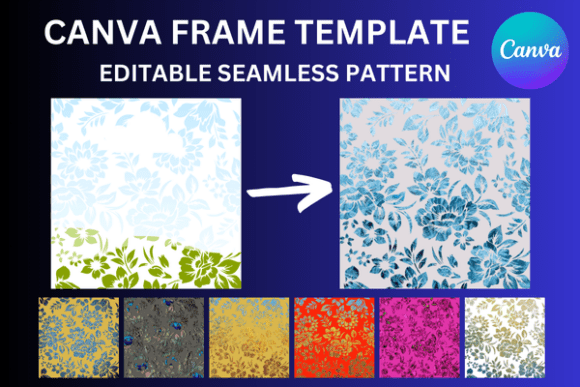
When I opened the Flower Seamless Pattern Canva Frame for the first time—yes, as a working embroidery designer who tests dozens of graphics weekly—I didn’t see just another floral frame. I saw rhythm. The pattern breathes: gentle curves, overlapping petals, and subtle negative space that invites stitching rather than fights it. It’s not fussy or over-rendered; it feels handmade even before thread touches fabric. That’s rare in digital graphics meant for embroidery prep—and it tells me this was designed *with stitch in mind*, not just pixels.
Real-World Use: That Tote Bag You’re Launching Next Week
Last Tuesday, I pulled out a natural linen tote for a client launch—soft, textured, slightly uneven weave. I needed something elegant but grounded, feminine but not fragile. Flower Seamless Pattern Canva Frame landed perfectly at the lower corner, scaled to 4.5 inches wide. In Canva, I dropped it into a mockup, then stepped back: no visual clutter, no awkward cut-offs, no “seam” visible where the repeat meets itself. That seamless quality? It translates directly to embroidery. When stitched on a curved surface like a tote handle seam or a baby onesie shoulder, the continuity holds. Customers notice that quiet polish—the kind that says “this wasn’t slapped on; it was considered.”
Where It Shines (and Where It Asks for Care)
This isn’t a one-size-fits-all graphic—it’s a thoughtful tool. Here’s how it behaves across real embroidery contexts:
- Custom apparel & sweatshirt embroidery: Works beautifully on mid-weight cotton blends and fleece. The open petal shapes allow fill stitch to breathe, reducing puckering risk. Avoid cramming it into a tiny chest pocket area—give it room to flow.
- Baby embroidery & nursery decor: Its soft edges and organic spacing make it ideal for onesies, burp cloths, and pillow covers. No sharp corners or micro-details that vanish when stitched small.
- Embroidered patch & cap front design: Holds up well on twill or denim patches. On curved cap fronts, test placement first—the outermost vines may need slight inward scaling to avoid distortion.
- Holiday gifts & personalized products: Paired with a monogram or short sentiment inside the frame, it elevates tea towels, kitchen aprons, and holiday stockings without overwhelming them.
- Etsy listings & small shop branding: As a printable mockup asset, it adds instant cohesion to your shop visuals—especially when used consistently across product photos and social banners.
Fabric & Function: What You’ll Want to Watch
Not every surface welcomes florals equally. Flower Seamless Pattern Canva Frame performs best on stable, medium-weight fabrics: cotton canvas, quilting cotton, brushed poly, and mid-weight knits with light stabilization. On thin or highly stretchy fabric—like lightweight jersey or silk charmeuse—those delicate vine ends can blur or distort unless you add tear-away + cut-away stabilizer combo. On dark fabric, ensure your thread colors have enough contrast; soft pastels may recede too much unless paired with matte or tonal threads. And on textured surfaces—burlap, heavy terry, or bouclé—scale up slightly and simplify surrounding elements in your layout to keep clarity.
Stitching Clarity Meets Customer Trust
Here’s what matters to buyers: they don’t see “design file”—they see *finished product*. Flower Seamless Pattern Canva Frame supports that perception. Its balanced density means fewer skipped stitches on home machines, cleaner satin edges on commercial setups, and consistent coverage across varied hoop sizes. That reliability builds trust: repeat Etsy buyers recognize your consistent finish, boutique partners feel confident ordering in bulk, and gift recipients sense care—not just craft.
It also supports brand consistency. Whether you’re using it for a single embroidered patch or building a full seasonal collection around botanical motifs, this frame provides visual anchoring without locking you into rigidity. You can rotate it, layer it with hand-lettering, fade it subtly behind applique, or reverse it for a watermark-style effect—all while keeping your aesthetic intact.
Practical Notes Every Embroidery Designer Should Run Through
Before stitching—or listing your next handmade product—run these checks:
- Test the Flower Seamless Pattern Canva Frame on scrap fabric matching your final project’s weight and stretch.
- Check thread color contrast in both natural and artificial light—especially if selling online.
- Review stitch density in your embroidery software: look for areas where fill stitch overlaps tightly; adjust underlay if needed.
- Confirm hoop size compatibility—some seamless repeats behave differently near hoop edges.
- Inspect small details at actual stitch size: those tiny leaf tips should hold shape, not dissolve into fuzz.
- Test black-and-white mockups: does the silhouette still read clearly without color?
- Compare performance on light vs. dark fabric backgrounds—you’ll spot contrast gaps early.
- Use appropriate stabilizer for your fabric type and machine speed—don’t assume “medium” is enough.
- Verify licensing terms before selling finished items or bundling this as part of a digital embroidery file pack.
Final Thought: A Quietly Versatile Asset
Flower Seamless Pattern Canva Frame doesn’t shout. It settles in—on a linen pillow, a child’s sweater, a boutique shopping bag—with calm confidence. It’s the kind of design that makes your work look intentional, not improvised. For embroidery designers, craft business owners, and Etsy sellers who value substance over sparkle, it’s less of a “trend” and more of a reliable, repeatable foundation—one that supports your voice instead of competing with it. Use it thoughtfully, test it honestly, and let its quiet rhythm do the rest.