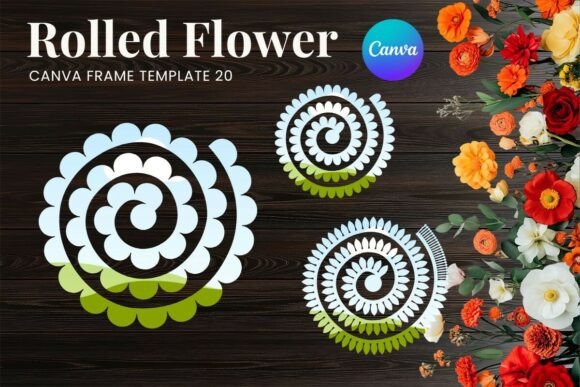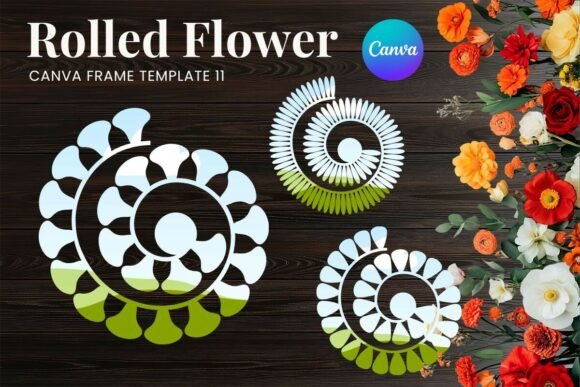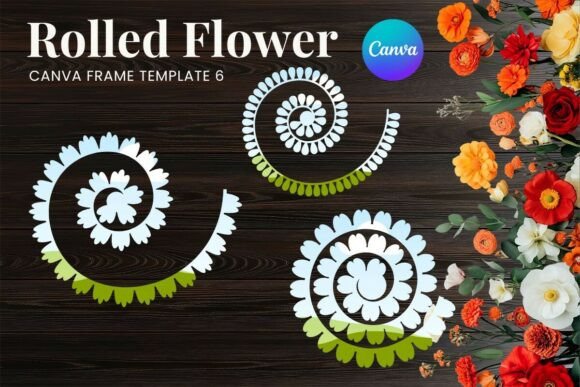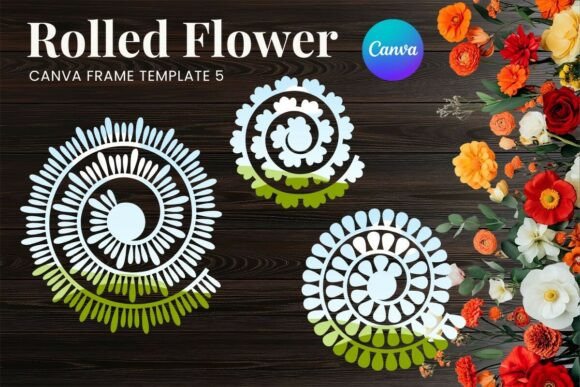
Rolled Paper Flower Canva Frame_19
A Delicate Frame That Asks for Thoughtful Stitching
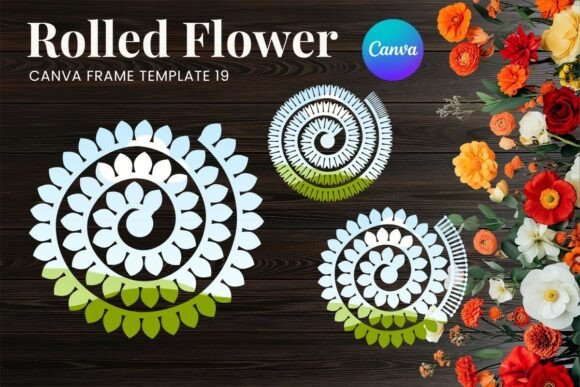
First impression? Soft, botanical, quietly elegant. Rolled Paper Flower Canva Frame_19 isn’t shouting — it’s leaning in with a hand-folded paper aesthetic that feels handmade before a single stitch is laid down. The three 12x12 inch Canva templates offer gentle curves, layered petal silhouettes, and subtle negative space that mimics the organic curl of real paper. As an embroidery designer who’s stitched everything from dense monograms on denim to fragile lace-inspired motifs on baby onesies, I immediately saw its potential — and its limits. This isn’t a bold statement design; it’s a whisper. And whispers only land when you give them the right fabric, stabilizer, and intention.
Where It Shines: Real Projects, Real Reactions
Last week, I prepped a custom embroidered tote bag for a local florist’s pop-up — soft natural canvas, medium-weight, no stretch. Rolled Paper Flower Canva Frame_19 worked beautifully as a corner accent near the handle strap. After converting the Canva frame into a clean vector outline (a necessary step before digitizing), I stitched it in matte cotton thread using a balanced mix of satin stitch for petals and light fill stitch for centers. Customers paused. They touched the texture. One said, “It looks like something I’d fold myself — but better.” That’s the sweet spot: when your machine embroidery design feels intentionally tactile, not just technically precise.
It also translated well onto a linen-cotton blend tea towel — centered, minimal, stitched in ecru on oat. No glare, no bulk, just quiet sophistication. For Etsy sellers offering personalized kitchen or nursery decor, this frame adds refined charm without overwhelming the item. As a baby embroidery option? Use it sparingly — think top corner of a muslin swaddle or outer edge of a crib bumper cover — and pair it with low-density stitching and ultra-soft stabilizer. On sweatshirts? Only on smooth, tightly woven fleece — never on brushed or loopback surfaces where paper-thin lines get lost.
Where It Needs Extra Care — Not Just Caution
This isn’t a one-size-fits-all embroidery file. Rolled Paper Flower Canva Frame_19 demands attention to context. On dark fabric? Test contrast early — those fine rolled edges vanish if thread lacks brightness or if stitch density runs too high. On stretchy knits (think t-shirts or baby bodysuits), skip it unless you’re adding heavy cutaway stabilizer *and* reducing stitch count manually. Tiny corners and tight curls won’t hold up on curved surfaces like caps or beanies — the distortion pulls detail out of shape. And don’t try to shrink it below 3.5 inches wide: delicate petal layers collapse, losing their signature paper-like dimension.
For embroidered patches or applique design work, treat it as a base outline only — not a ready-to-stitch file. You’ll need to rebuild interior fills and adjust underlay for stability. As a tote bag design or pillow cover motif, it thrives at 4–6 inches tall. Any larger, and the subtlety fades; any smaller, and it reads as vague rather than intentional.
What It Adds to Your Finished Product — Beyond Pretty
When used well, Rolled Paper Flower Canva Frame_19 lifts perceived value. It signals care, curation, and craftsmanship — especially alongside handwritten names or minimalist typography. For small shop owners and craft fair vendors, that matters. A customer paying $48 for a linen apron notices the difference between a generic floral clipart and a thoughtfully scaled, paper-inspired frame. It builds trust: they sense you didn’t grab the first thing off a free graphics site. It supports brand consistency for creative entrepreneurs who favor earthy, slow-made aesthetics — think botanical studios, ceramicists, or herbal apothecaries selling embroidered gift sets.
But let’s be real: it won’t drive impulse buys on its own. Its strength is in harmony — pairing with hand-lettered quotes, monogram initials, or seasonal motifs (a tiny sprig of rosemary for holiday towels, a single leaf for spring baby items). Used alone on a plain white shirt? It risks feeling unfinished. Used as part of a cohesive, lightly layered composition? It becomes memorable.
Practical Designer Notes Before You Stitch
- Always test on scrap fabric first — especially with textured weaves or blends. What looks crisp in Canva rarely stitches crisply without adjustment.
- Review stitch density carefully. High density flattens the “rolled” illusion; too little loses definition. Aim for balance — especially in petal overlaps.
- Confirm hoop size compatibility. These frames are designed for 12x12 inch layouts, but your actual embroidery project may require scaling — check how that affects fine details.
- Inspect small details in black-and-white mockups. If edges blur or disappear without color, simplify before digitizing.
- Use appropriate stabilizer: tear-away for stable wovens, cutaway for knits or lightweight fabrics, and water-soluble for delicate surfaces like silk or sheer voile.
- Verify licensing terms — since Rolled Paper Flower Canva Frame_19 is a digital embroidery file distributed via PDF link, confirm whether commercial use (e.g., selling finished embroidered goods or digital product previews) is permitted before listing on Etsy or your small shop.
- Compare thread colors across light and dark backgrounds. A warm ivory works on cream linen but disappears on charcoal — sometimes switching to heather gray or pale sage delivers more clarity than brighter tones.
Final Thought: A Frame, Not a Filler
Rolled Paper Flower Canva Frame_19 doesn’t beg for attention — it earns it. It’s best suited for designers and makers who understand that restraint, intention, and context are just as vital as stitch count or thread sheen. Use it to elevate, not decorate. To suggest, not shout. Whether you’re building a boutique embroidery line, personalizing wedding gifts, or developing digital product assets for fellow crafters, this frame rewards patience and precision. It’s not the easiest design to execute — but when it lands, it feels like the detail someone truly cared about.