Rolled Paper Flower Canva Frame_11
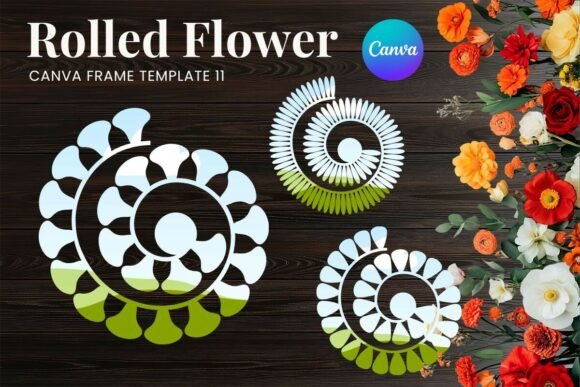
As a designer who’s stitched hundreds of client projects—from monogrammed baby blankets to boutique sweatshirt collections—I opened Rolled Paper Flower Canva Frame_11 expecting charm. What I found was something more useful: quiet intentionality. This isn’t a flashy, over-saturated graphic—it’s a soft, dimensional paper flower motif built as a frame, not a centerpiece. Think of it as the gentle border around a personalized name on a linen tea towel, or the delicate accent circling a tiny embroidered “Welcome” on a nursery pillow cover.
I tested it first in a real scenario: prepping a custom embroidered tote bag for a local florist’s pop-up shop. She wanted something handcrafted-feeling but clean—no fussy script, no heavy motifs. Just warmth, texture, and unmistakable handmade appeal. Rolled Paper Flower Canva Frame_11 landed perfectly there—not as the main event, but as the thoughtful frame that makes the inside text feel curated, intentional, and quietly special.
First Impression: Light, Layered, and Purposefully Sparse
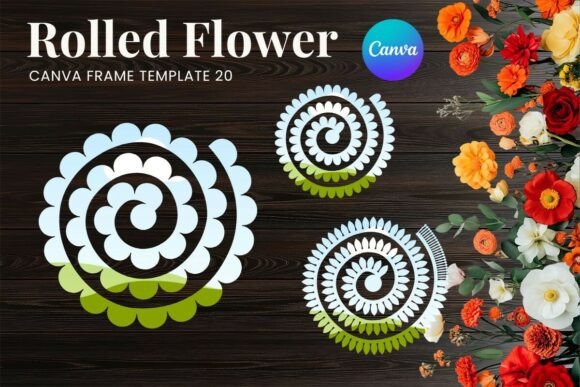
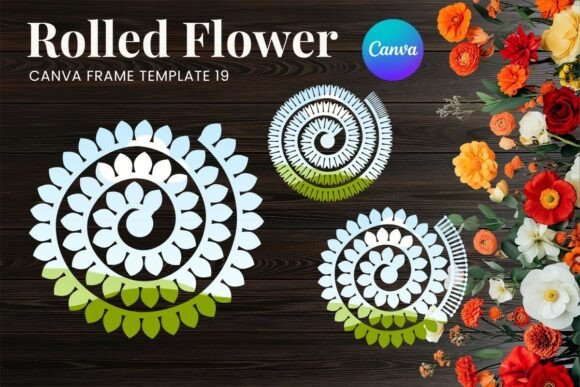
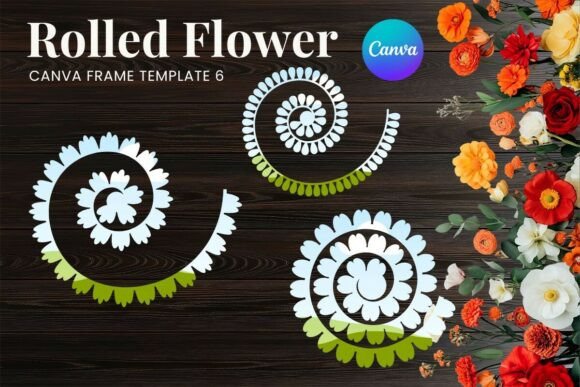
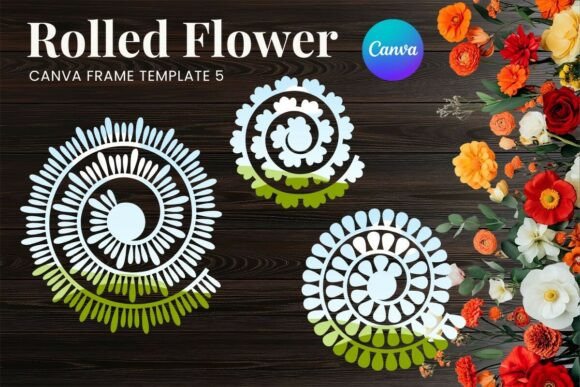
The design breathes. It’s composed of three distinct paper flower shapes—each with subtle rolled edges and soft curvature—arranged asymmetrically along a 12x12 inch canvas. There’s no dense fill stitch overwhelming the eye; instead, the layout leans into negative space. That’s a huge win for embroidery. Too many digital frames drown under satin stitch bulk or get lost in thread buildup. This one respects fabric real estate. It feels like something you’d sketch by hand—slightly imperfect, gently organic—and that translates directly to how it reads once stitched.
Mood-wise? It’s spring-adjacent without being seasonal, feminine without being frilly, and decorative without sacrificing clarity. That makes it unusually versatile: equally at home on a neutral linen apron for a ceramicist’s studio or a cream cotton onesie for a baby shower gift.
Where It Shines (and Where to Pause)
Rolled Paper Flower Canva Frame_11 performs best when treated as an *embroidery-ready visual guide*, not a machine embroidery design itself. Since it arrives as a PDF with links to Canva templates—not stitch files—you’ll use it to plan placement, scale, and composition before digitizing or selecting your final embroidery file. That’s actually a strength: it gives you full control over how much detail to translate into thread.
It works beautifully for:
- Custom apparel—especially on structured, medium-weight fabrics like cotton twill tote bags or midweight sweatshirts where the frame can sit cleanly around a central monogram or phrase;
- Baby embroidery—its soft curves and open layout avoid harsh lines or tiny, hard-to-stitch details that snag or unravel on delicate knit onesies;
- Embroidered patches—scale it down slightly and use it as a layout guide for a floral border patch, then digitize with balanced fill and satin stitch density;
- Holiday or wedding gifts—frame a handwritten date or initials on a kitchen towel or pillow cover for instant heirloom energy;
- Etsy listings and small shop product photography—drop it into Canva mockups to show how a finished embroidered item might look, keeping your branding consistent and your presentation polished.
Use caution on:
- Stretchy or thin fabrics—the open, asymmetrical shape relies on stable fabric to hold its form. On jersey or lightweight rayon, you’ll need extra cutaway stabilizer and possibly simplified stitching paths;
- Curved surfaces like caps—the uneven flower placement doesn’t adapt well to domed areas without significant manual repositioning or digitizing adjustments;
- Densely textured fabrics—like bouclé or heavy terry cloth—the delicate paper roll effect can disappear visually if the base fabric fights the stitch definition;
- Dark fabric backgrounds—since this is a graphics-based frame, not a pre-digitized file, ensure your chosen thread colors create enough contrast. Test light thread on dark fabric in a printable mockup first.
Design Integrity Meets Real-World Craft
What sets Rolled Paper Flower Canva Frame_11 apart isn’t novelty—it’s coherence. It supports your handmade product without competing with it. When customers see this framing a name or phrase on a finished item, they don’t think “cute graphic.” They think “someone took time to make this feel personal.” That perception lifts perceived value, builds trust, and strengthens brand consistency—especially for craft businesses where authenticity is the core offering.
For Etsy sellers and small shop owners, it’s a smart, reusable asset. Use it across multiple product types—tote bag, tea towel, pillow cover—with consistent visual language. No need to reinvent the frame each time. And because it’s delivered as Canva templates, you can easily tweak spacing, rotate individual flowers, or adjust sizing to match your hoop or fabric dimensions before committing to stitch.
Practical Designer Notes Before You Stitch
Before using Rolled Paper Flower Canva Frame_11 in any embroidery project:
- Test on scrap fabric first—especially if pairing with satin stitch or dense fill elements;
- Check thread color contrast in both natural and artificial light—soft pastels can fade on off-white linen;
- Review stitch density if digitizing from this frame—avoid overloading outer petals with too many overlapping satin stitches;
- Confirm your hoop size matches the scaled-down version you’ll actually embroider (12x12 is generous—most tote bag or pillow applications will use 4x4 or 5x7);
- Inspect small details in your final digitized version—rolled edges should read as dimension, not clutter;
- Try black-and-white mockups to assess balance and hierarchy before adding color;
- Compare light and dark fabric backgrounds using Canva’s background swap tool—it changes everything;
- Use appropriate stabilizer—medium-weight cutaway for knits, tear-away for stable wovens;
- Verify licensing before selling finished items or reselling digital adaptations—this is a graphics template, not a commercial-use embroidery file by default.
Rolled Paper Flower Canva Frame_11 won’t shout. But in a market flooded with loud, algorithm-friendly designs, its quiet confidence is exactly what makes it stick—and sell. It’s the kind of detail that makes a customer pause, tilt their head, and say, “Who made this? I want more from them.” That’s not just good design. That’s good business.